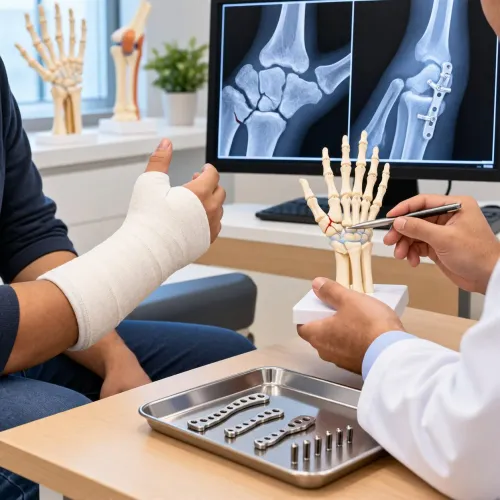
Children are naturally active, and falls are part of growing up. While many injuries involve simple bruises, fractures require timely medical attention to ensure proper healing and healthy bone growth. Choosing an experienced orthopaedic specialist can make a significant difference in a child's recovery and long-term development.
Why Children's Fractures Are Different
Children's bones are still growing, making them different from adult bones.
Growth plates, located near the ends of bones, play an important role in bone development. Injuries involving these areas require careful evaluation because improper healing may affect future growth.
For this reason, children's fractures should never be managed exactly like adult fractures.
Common Causes of Fractures
Frequent causes include:
- Playground falls
- Bicycle accidents
- Sports injuries
- Home accidents
- School-related falls
- Road traffic accidents
Most fractures occur in the arms, wrists, elbows, and collarbone, although leg fractures are also common.
Symptoms Parents Should Notice
Seek medical attention if a child has:
- Severe pain
- Swelling
- Visible deformity
- Difficulty moving a limb
- Inability to bear weight
- Persistent crying after injury
Even when no deformity is visible, ongoing pain should not be ignored.
How Is the Fracture Diagnosed?
An orthopedic specialist evaluates:
- Injury mechanism
- Swelling
- Bone alignment
- Joint movement
- Blood circulation
- Nerve function
Diagnostic tests usually include:
- Digital X-rays
- CT scans for complex fractures when needed
- MRI in selected cases involving soft tissues
Treatment Options
Treatment depends on:
- Child's age
- Type of fracture
- Bone involved
- Degree of displacement
Management may involve:
- Splints
- Plaster casts
- Closed reduction
- Surgical fixation for unstable fractures
The goal is to restore normal alignment while protecting future bone growth.
Questions Parents Can Ask
Helpful questions include:
- Is the growth plate affected?
- Will surgery be necessary?
- How long will the cast remain?
- When can sports resume?
- Will follow-up X-rays be needed?
Understanding the treatment plan helps families support recovery at home.
Recovery and Follow-Up
Children generally heal faster than adults.
However, follow-up appointments remain essential to:
- Monitor healing
- Check bone alignment
- Evaluate growth plate recovery
- Guide return to activities
Skipping follow-up visits may allow complications to go unnoticed.
Choosing an Orthopaedic Clinic
Parents should consider:
- Experience with pediatric fractures
- Accurate imaging facilities
- Clear communication
- Structured follow-up
- Personalized rehabilitation when necessary
Families in Bengaluru seeking fracture care for children can consult Dr Harish Madrekar's Orthopaedic Clinic for comprehensive evaluation and individualized treatment. The clinic emphasizes accurate diagnosis, appropriate fracture management, and careful monitoring to support healthy bone healing throughout childhood.
Keywords