A PRP decision depends on more than an MRI report or a promise of cartilage repair. You will learn how the injection is prepared, who may benefit, what results and risks to expect, which questions to ask, and how to compare the full cost before consenting.
Key takeaways
- Confirm the pain source before choosing PRP for your knee.
- Disclose blood disorders, infections, medicines and recent procedures.
- Compare quotes for consultation, blood processing, injection and follow-up.
- Expect temporary soreness; assess improvement over the follow-up period.
What happens during a PRP knee injection appointment?
Platelet-rich plasma (PRP) is a concentrated portion of your own blood containing platelets and plasma. A PRP injection for knee joint is not a single-step treatment: the clinician first identifies the pain source, then prepares and places the blood product accordingly.
1. Consultation: You discuss your pain, stiffness, walking limits, previous treatments, medicines and treatment goals.
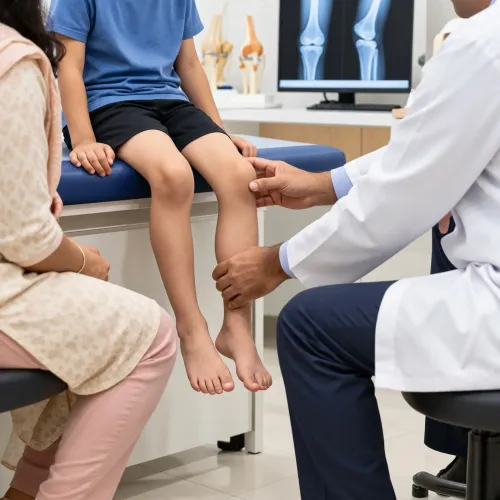
2. Symptom review and examination: The clinician checks tenderness, swelling, movement, alignment, strength and stability to identify whether the knee joint, tendon or ligament is causing the symptoms.
3. Imaging review: Weight-bearing X-rays or MRI findings are reviewed alongside your symptoms and examination. An abnormal scan alone does not establish that PRP is appropriate.
4. Blood draw: Staff take a measured amount of your blood, usually from an arm vein. Ask how much blood the planned system requires.
5. Processing: A centrifuge or another preparation system separates and concentrates the platelets. Systems differ in platelet concentration, white-cell content, volume and activation method.
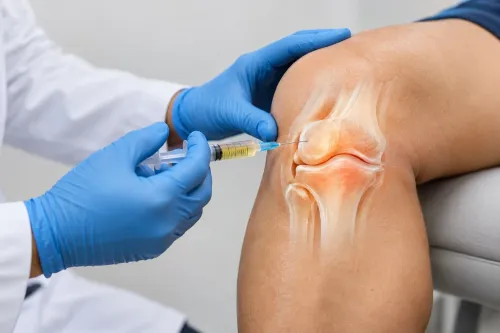
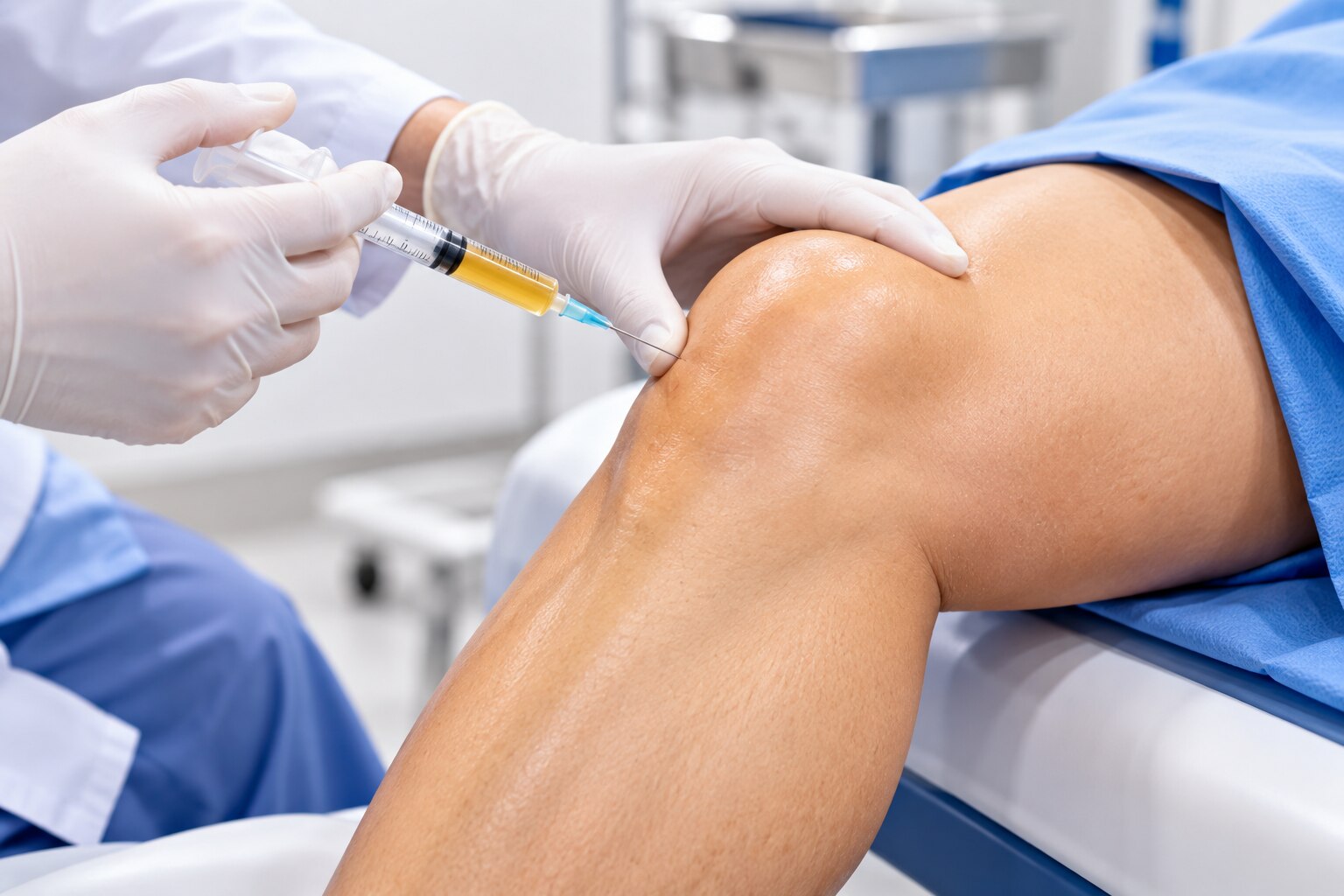
6. Sterile injection: After cleaning the skin and preparing sterile equipment, the clinician injects PRP into the knee joint space for osteoarthritis or targets a tendon or ligament area when that structure is the pain source. Ultrasound can help guide placement, but guidance does not guarantee a better clinical result.
7. Observation: You remain briefly for a safety check and receive instructions about activity, pain relief and follow-up.
Confirm whether the plan is one injection or a series. Ask how many injections, the preparation system, total blood volume and follow-up visits are included.
Who meets PRP knee treatment eligibility?
Adults with symptomatic mild-to-moderate knee osteoarthritis are the group most commonly considered for PRP knee treatment eligibility, especially after exercise-based physiotherapy, weight management when relevant, activity modification and simple analgesia have not provided enough relief.
Eligibility requires a working diagnosis, not an MRI abnormality alone. The clinician should match your symptom pattern with a physical examination, activity demands, weight-bearing knee X-rays and MRI when indicated. An MRI finding that does not match your pain is not a reason to inject.
Findings that can make PRP a poor fit include:
- Advanced bone-on-bone arthritis or major knee deformity
- Inflammatory arthritis
- An untreated acute knee injury
- Meniscal symptoms or ligament instability driving the pain
- Active infection or a skin infection near the needle site
- Low platelet count, significant anaemia or another blood disorder
- Uncontrolled diabetes
- Some cancer-related concerns
Pregnancy-related questions need individual medical advice. Tell the clinician about blood thinners, antiplatelet medicines and other illnesses before scheduling treatment; do not stop prescribed medication without instructions from the prescribing clinician.
PRP is elective symptom management, not a guaranteed cartilage-regrowth treatment. It is not an automatic alternative to knee replacement when damaged bone, deformity or severe loss of function is the main problem. Before consenting, ask for the diagnosis, expected benefit, alternatives and the plan if symptoms do not improve.
What results and side effects should you expect?
Expect any improvement in pain, walking, stair use or activity to develop over weeks to months, not immediately. The main prp knee injection benefits are symptom relief and better function; PRP does not mechanically correct arthritis or guarantee cartilage regrowth.
Pain, stiffness or swelling can worsen for several days after injection. Plan lighter activity during that period and follow the clinician’s instructions for pain relief. Infection, bleeding, nerve or tissue injury, and allergic reactions are uncommon but possible. Seek prompt medical review for fever, increasing redness or severe, escalating pain.
The 2021 American Academy of Orthopaedic Surgeons guideline describes the evidence for pain and function improvement as limited. In the RESTORE randomized trial, one intra-articular PRP injection did not outperform saline at 12 months for mild-to-moderate knee osteoarthritis. Response is not guaranteed, and how long benefit lasts remains inconsistent.
| Injection | Typical comparison | Important limitation |
|---|---|---|
| PRP | Possible improvement over weeks to months | Results vary by preparation and schedule |
| Corticosteroid | Often faster, shorter-term relief | Does not repair arthritis |
| Hyaluronic acid | Variable symptom relief | Not proven superior for every patient |
Published studies use leukocyte-rich or leukocyte-poor plasma, different platelet concentrations, activated or non-activated products, and one, two or three injections. A claimed success rate means little unless it names the preparation, dose, number of injections, outcome measure and follow-up time. Repeat treatment should follow your response and diagnosis, not an automatic annual schedule.
How should you prepare and what should you disclose?
Prepare for the consultation by bringing your medicine list, recent reports and details of prior knee treatment. Disclose every condition that could change bleeding, infection risk or healing.
| Topic | Tell the clinician | Confirm before the procedure |
|---|---|---|
| Medicines | Aspirin, clopidogrel, warfarin, apixaban, rivaroxaban, steroids and recent antibiotics | Do not stop an anticoagulant or antiplatelet drug without instructions from its prescribing clinician. Ask whether non-steroidal anti-inflammatory drugs need timing changes; clinic policies differ. |
| Health | Fever, a bleeding disorder, low platelet count, anaemia, diabetes, cancer treatment or pregnancy | Ask whether the procedure should be delayed or needs another specialist’s advice. |
| Recent care | Recent injections or knee surgery | Confirm whether these change the injection date or target. |
Ask whether you should eat normally. Do not assume fasting is required. Confirm whether someone should drive you home, and wear clothing that exposes the knee and blood-draw site.
Before signing consent, obtain:
- The working diagnosis and why PRP fits it.
- The exact PRP protocol, including preparation and injection site.
- Alternatives such as exercise-based physiotherapy and conventional injections.
- The risks, realistic response time and plan if symptoms do not improve.
- Expected activity restrictions, permitted pain relief, first review and when to judge the result.
A clear plan prevents medication errors and unrealistic expectations.
What does PRP knee injection cost in Bengaluru, and how should you compare quotes?
Expect an indicative PRP knee injection cost in Bengaluru of roughly ₹3,000–₹15,000 per session. There is no single regulated nationwide tariff for PRP knee injection in Bengaluru, because clinics use different preparation systems, staffing, equipment and treatment plans.
| Quote item | Ask what is included | Why it changes the total |
|---|---|---|
| Blood draw and PRP processing | The preparation system, laboratory handling and sterile consumables | Systems, processing time and materials differ |
| Injection | One injection or a planned course | Two or three sessions cost more than one |
| Guidance | Ultrasound guidance or landmark-based placement | Image guidance adds equipment and clinician time |
| Clinical care | Consultation, follow-up and review | These may be billed separately |
| Recovery support | Imaging, physiotherapy and rehabilitation advice | A low procedure price can hide later charges |
| Billing | Taxes and all other fees | The advertised figure may exclude tax |
Ask for a written total naming every included item and stating whether it covers one injection or a course. A ₹3,000 session is not cheaper if you need three sessions plus separately billed imaging and physiotherapy.
Before choosing treatment, ask the orthopaedic clinician to state the diagnosis, why PRP fits it, where the product will be placed and how success will be measured. Dr Harish Madrekar's Orthopaedic Clinic can provide clinic-specific details about preparation, guidance, follow-up and a complete written quote; verify each point before booking.
Related service
REGENERATIVE ORTHOPAEDICS PLATE RICH PLASMA IS INJECTED INTO YOUR KNEES FOR CARTILAGE REMODELLING View service → |
Frequently asked questions
What happens during a PRP knee injection appointment?
The clinician assesses your knee and pain source, draws your blood, processes it to concentrate platelets, and injects the preparation into the selected knee structure. Ultrasound guidance may be used when appropriate.
Who meets PRP knee treatment eligibility?
Eligibility depends on the diagnosis, severity and location of the knee problem, overall health, blood counts, medicines and infection risk. A clinician must confirm that PRP suits your condition.
What results and side effects should you expect?
Results vary by diagnosis and patient. Temporary pain, swelling, bruising or stiffness can occur after the injection. Seek medical advice for fever, spreading redness, severe pain or worsening swelling.
How should you prepare for a PRP knee injection?
Share your medical history, allergies, medicines, bleeding problems, infections and recent procedures. Follow the clinic’s instructions about food, fluids, pain medicines and activity before the appointment.
What does PRP knee injection cost in Bengaluru?
Ask for an itemised quote covering consultation, blood collection, processing, injection, imaging guidance, medicines and follow-up. Compare what each clinic includes rather than comparing one headline price.
Keywords