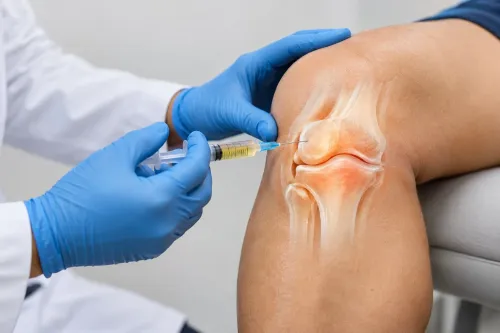
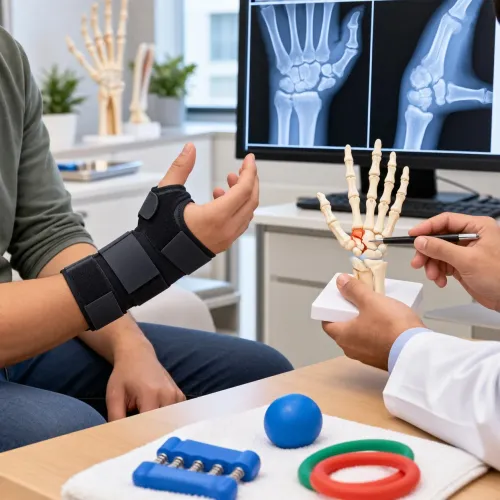
A sudden twist of the knee during football, badminton, basketball, running, or another pivoting activity can result in an anterior cruciate ligament injury. Some people hear or feel a 'pop,' followed by swelling and difficulty continuing the activity. Others initially recover but later notice that the knee repeatedly gives way during turning or directional changes.
For selected patients with significant instability, ACL arthroscopic reconstruction may be considered after a detailed assessment.
The anterior cruciate ligament helps control forward movement and rotational stability of the knee. An ACL tear does not affect every person in exactly the same way, which is why treatment decisions should reflect activity requirements rather than MRI findings alone.
Does every ACL tear require reconstruction?
No.
Age, activity level, degree of instability, associated injuries, occupation, sporting goals, and response to rehabilitation all influence treatment.
Someone who performs mainly straight-line, low-demand activities may have different requirements from a competitive athlete who regularly pivots, cuts, lands, and changes direction.
Structured rehabilitation can be appropriate in some cases. Reconstruction becomes more relevant when functional instability persists, the person wishes to return to pivoting sports, or associated knee injuries alter the treatment strategy.
What happens during ACL reconstruction?
A torn ACL usually cannot simply be stitched back together in the way many people imagine. Reconstruction generally uses a tendon graft to create a new ligament.
Arthroscopic techniques allow the surgeon to inspect the knee through small portals and evaluate other structures, including the menisci and cartilage. The graft is positioned through carefully planned bone tunnels and secured to restore functional stability.
Graft selection is individualized and can depend on patient characteristics and sporting demands.
Rehabilitation determines much of the journey
An operation is only one part of ACL treatment.
Rehabilitation typically progresses through stages rather than being based on a single calendar date. Early priorities can include controlling swelling, regaining knee extension, improving flexion, and restoring muscle activation.
Later phases focus on strength, balance, neuromuscular control, running progression, jumping, landing mechanics, and sport-specific movement.
Returning to sport simply because several months have passed may overlook important functional deficits. Strength symmetry, movement quality, confidence, knee stability, and sport-specific testing can all contribute to return-to-play decisions.
A common mistake after an ACL injury
One mistake is assuming that reduced pain means the ligament has recovered.
Once the initial swelling settles, walking may become relatively comfortable. Yet the knee may still be unstable during sudden turning, landing, or deceleration.
Another mistake is neglecting rehabilitation before surgery. In selected patients, improving swelling, range of motion, and muscle function before reconstruction can be an important part of preparation.
Bengaluru has a large community involved in recreational football, badminton, running, gym training, and competitive sports. Active patients should therefore explain their exact sporting goals during an orthopaedic consultation rather than simply stating that they want the knee 'fixed.'
At Dr Harish Madrekar's Orthopaedic Clinic, assessment of an ACL injury can include clinical stability testing, imaging review, associated knee injuries, activity requirements, and rehabilitation goals.
The objective of ACL management is broader than repairing an MRI abnormality. It is to develop an appropriate plan for restoring a stable, functional knee while considering the patient's sport, work, lifestyle, and long-term joint health.
Keywords