The first few steps after getting out of bed can be surprisingly painful for someone with plantar fasciitis. Heel discomfort may ease after moving around and then return after prolonged standing, walking, or activity. For people whose jobs require standing or who have recently increased their exercise, this pattern can become particularly frustrating.
Effective plantar fasciitis treatment usually begins with identifying the factors placing excessive stress on the plantar fascia rather than relying on temporary pain relief alone.
The plantar fascia is a strong band of tissue extending along the bottom of the foot. Repeated loading can irritate the area where it attaches near the heel.
Why does plantar fasciitis develop?
There is rarely one universal cause.
Contributing factors can include a sudden increase in walking or running, prolonged standing, calf tightness, changes in footwear, foot mechanics, weight gain, and training errors.
The condition is common among active adults but can also affect people who are not involved in sports.
What does plantar fasciitis usually feel like?
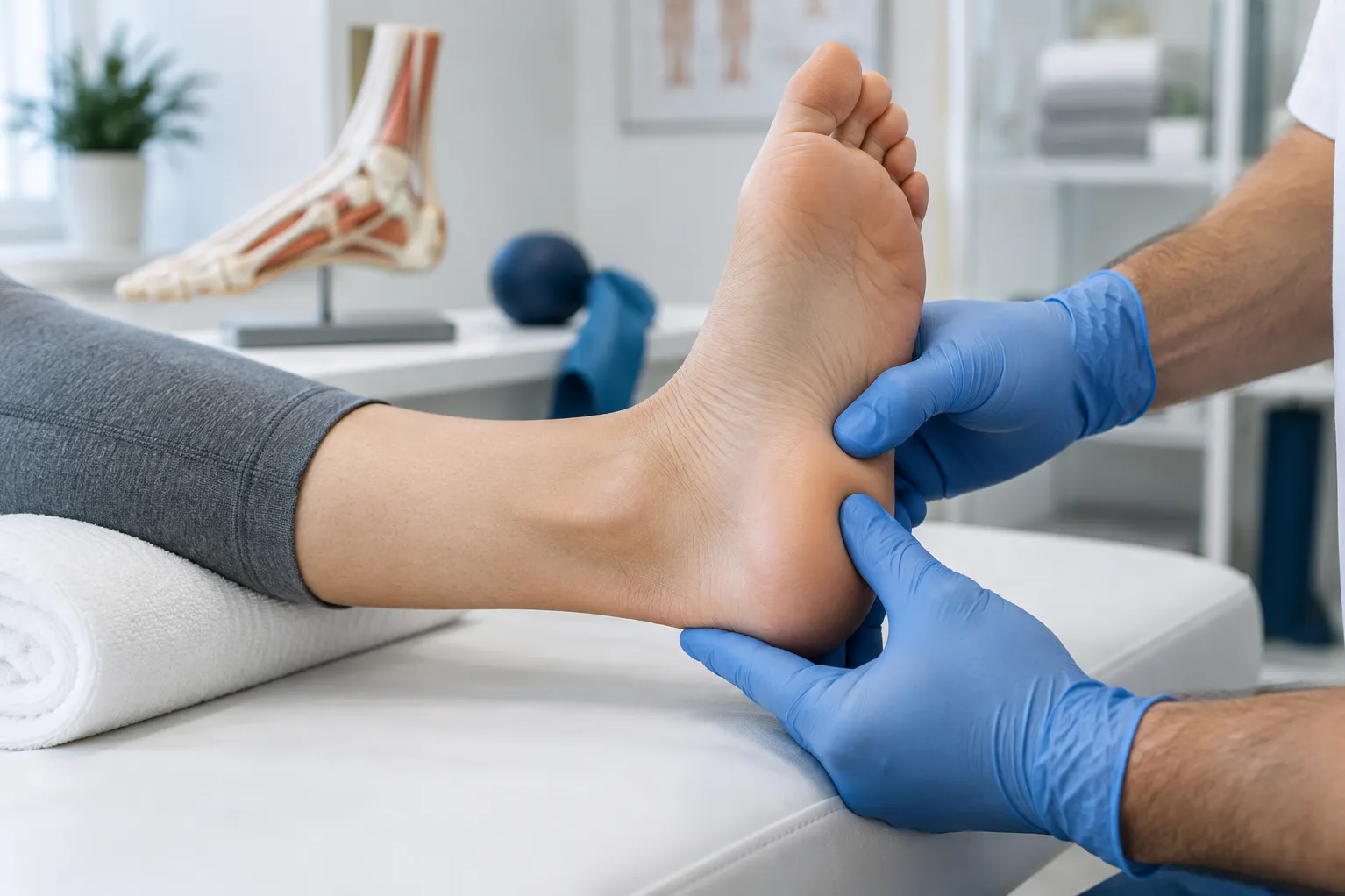
A classic symptom is pain beneath the heel that is particularly noticeable during the first steps in the morning or after sitting for a long period.
Pain may also increase after extended standing or physical activity.
Not every case of heel pain is plantar fasciitis, however. Nerve irritation, stress injuries, heel-pad disorders, inflammatory conditions, and other problems can produce pain in the same region.
Persistent or unusual symptoms therefore deserve proper assessment.
What can be done before considering invasive treatment?
Conservative management is commonly the starting point.
Depending on the individual case, a treatment programme may include:
- Modifying activities that repeatedly aggravate the heel
- Calf and plantar fascia stretching
- Progressive strengthening
- Appropriate footwear
- Temporary load management
- Assessment of training volume
- Weight management where relevant
The aim is to reduce excessive tissue stress while maintaining appropriate activity rather than simply stopping all movement.
What about heel spurs?
Patients often become concerned when an X-ray mentions a heel spur.
A spur can coexist with plantar fasciitis, but its presence does not automatically mean it is the direct cause of symptoms or that it needs to be surgically removed.
Clinical findings remain important when interpreting imaging.
Why can recovery take time?
The plantar fascia is repeatedly loaded during normal walking, so improvement may be gradual. Patients can also unintentionally prolong symptoms by repeatedly returning to high-impact exercise as soon as pain temporarily improves.
A better approach is progressive loading.
For example, someone returning to running may need to rebuild walking tolerance and lower-limb strength before resuming previous mileage. A person who stands throughout the working day may require changes in footwear and workload while rehabilitation progresses.
Bengaluru residents may experience heel symptoms while commuting, standing at work, exercising in gyms, running, or walking extensively throughout the day. Understanding the activities that repeatedly trigger pain can make treatment more specific.
At Dr Harish Madrekar's Orthopaedic Clinic, persistent heel pain can be evaluated to distinguish plantar fascia problems from other possible causes and determine an appropriate management plan.
Plantar fasciitis usually requires patience and consistent rehabilitation rather than a quick fix. When treatment addresses flexibility, strength, footwear, activity load, and individual contributing factors together, it provides a more logical pathway toward restoring comfortable everyday movement.
Keywords