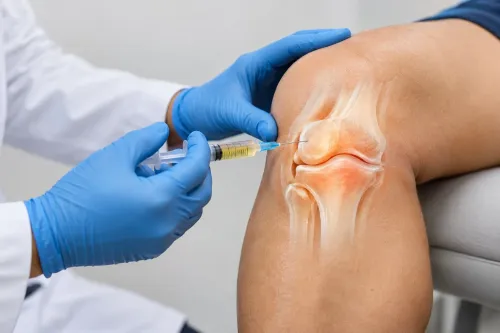
Knee pain can gradually change the way a person walks, climbs stairs, sleeps, exercises, and handles everyday activities. In the early stages of arthritis, symptoms may often be managed with activity modification, physiotherapy, weight management, appropriate medication, or injections depending on the underlying condition. When knee damage becomes advanced and conservative measures no longer provide adequate relief, total knee replacement surgery may become one of the treatment options considered.
The knee joint contains cartilage that allows the ends of the thigh bone and shin bone to move smoothly. Osteoarthritis, inflammatory arthritis, previous injuries, and certain joint conditions can progressively damage this protective surface. As cartilage loss becomes severe, movement may become painful and the knee can become increasingly stiff or deformed.
When is knee replacement usually considered?
The decision is not based on an X-ray alone. An orthopaedic evaluation considers how much the condition is affecting the patient's quality of life.
Surgery may be discussed when there is:
- Persistent knee pain during walking or routine activities
- Significant stiffness affecting knee movement
- Difficulty climbing stairs or getting up from a chair
- Pain at rest or at night
- Progressive bowing or other knee deformity
- Advanced joint damage seen on appropriate imaging
- Limited benefit from well-planned non-surgical treatment
Some people can have considerable arthritis on an X-ray while still functioning reasonably well. Others may experience major limitations. This is why symptoms, physical examination findings, imaging, medical history, age, activity requirements, and expectations all need to be considered together.
What happens during total knee replacement?
The procedure does not simply involve replacing the entire knee with an artificial joint. The damaged joint surfaces are carefully prepared, and appropriately sized prosthetic components are positioned to recreate a functional joint surface.
Surgical planning also involves assessing alignment, ligament balance, stability, and range of motion. The exact approach varies according to the condition of the knee and the patient's anatomy.
Recovery is equally important. Physiotherapy generally focuses on restoring movement, strengthening the muscles supporting the knee, improving walking, and gradually returning to everyday activities.
Is surgery the first treatment for arthritis?
Usually not.
Many patients with knee arthritis can initially be managed without joint replacement. Depending on the diagnosis and severity, treatment can include exercises, physiotherapy, lifestyle changes, pain-management strategies, walking aids, or other interventions.
The important question is therefore not simply, 'Do I have arthritis?' It is, 'How advanced is the joint damage, and how much is it affecting my daily function despite appropriate treatment?'
For patients in Bengaluru and elsewhere in Karnataka, this distinction can prevent both premature surgery and unnecessary delays when severe arthritis has already substantially limited mobility.
Preparing for an orthopaedic consultation
It helps to explain exactly what the knee prevents you from doing. Rather than saying only that the knee hurts, mention whether you struggle with stairs, walking distances, getting into a vehicle, sleeping, standing for work, or performing household activities.
Bring previous X-rays, MRI scans, medical reports, and a list of medications if available.
At Dr Harish Madrekar's Orthopaedic Clinic in Bengaluru, evaluation for knee arthritis can include assessment of symptoms, joint movement, stability, alignment, imaging findings, previous treatments, and individual functional needs before determining whether replacement surgery is appropriate.
Total knee replacement can be an important option for selected patients with advanced joint disease, but the decision should remain individualized. Understanding the severity of arthritis, available alternatives, expected rehabilitation, possible risks, and realistic recovery goals helps patients make a better-informed treatment decision.
Keywords